(Image source from: AFP)
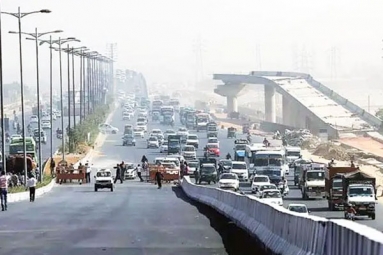
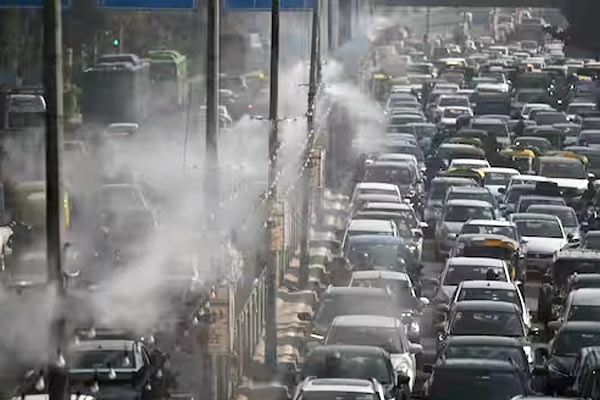
Vehicles lacking BS-VI engines are prohibited from entering the national capital starting today as part of strict measures to combat pollution initiated by the Delhi government. Fuel stations will not provide service to cars that do not have a pollution certificate. This decision to permit only cars with BS-VI engines is likely to affect 1.2 million vehicles coming into Delhi from nearby areas such as Gurugram, Ghaziabad, Faridabad, and Noida. More than 400,000 vehicles from Noida, around 200,000 from Gurgaon, and 550,000 from Ghaziabad will be stopped from entering the capital. A total of 580 police officers are assigned to check vehicles, and 37 enforcement vehicles are positioned at 126 checkpoints. Staff from the Transport Department, Municipal Corporation, and Food Department have been assigned to petrol stations. Delhi has already installed automatic number plate recognition cameras at petrol stations to detect vehicles without valid PUC certificates.
Environmental Minister of Delhi Manjinder Singh Sirsa made this announcement on Tuesday. These measures will remain effective while Stage IV of the Graded Response Action Plan (GRAP) is in effect in the national capital. The Delhi government has taken these tough steps after studies revealed that vehicles contribute to 19.7 percent of PM 10 and 25.1 percent of PM 2.5 pollution during the winter months. Efforts are underway to reduce traffic jams at 100 identified hotspots and to create a cohesive traffic system that will minimize both wait times and pollution at traffic signals. Today, the Lok Sabha will discuss pollution issues under Rule 193. The Congress and other opposition parties have called for this debate, with Opposition Leader Rahul Gandhi consistently advocating for it both in and out of Parliament.
At 5 p.m., Union Environment Minister Bhupender Yadav will respond to the short-duration discussion, which is deemed important for highlighting key issues of public interest in Parliament. The Air Quality Index (AQI) in Delhi has remained between "Severe" and "Very Poor" since November. At 4 p.m. on Wednesday, the 24-hour average AQI was recorded at 334, categorizing it as "very poor," slightly better than the reading of 354 from Tuesday. In-person classes for primary school students have been halted, while secondary and higher secondary students can choose between online and in-person classes. Offices have been instructed to function with only 50 percent of their staff on-site.