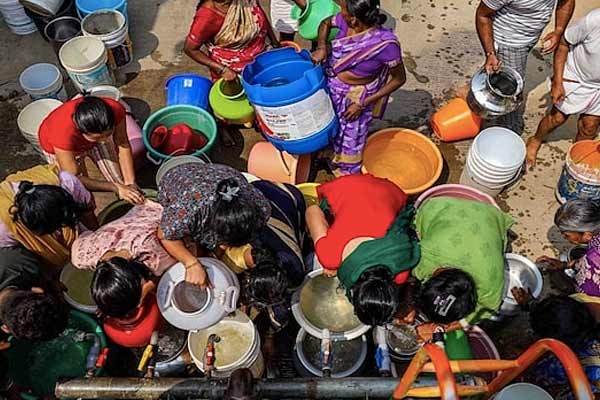
(Image source from: Thequint.com)
Sixteen individuals have tragically lost their lives in Bhagirathpura after drinking tainted water in Indore, Madhya Pradesh, which is officially recognized as the "cleanest city" in India. Over 1,400 people have experienced health issues, with some still fighting for their lives in medical facilities. Recently, the situation has taken a worrying turn. A 67-year-old resident from Bhagirathpura, named Parvati Bai Kondla, is showing signs of Guillain-Barre Syndrome (GBS), a rare and potentially deadly nerve condition that affects the body's nerves. This raises concerns that the contaminated water may have led to not only stomach problems but also lasting nerve damage. Parvati is currently on a ventilator for help with breathing and is undergoing dialysis due to kidney issues as her nervous system fails.
She first became unwell on the night of December 27, suffering from vomiting and diarrhea. The following day, she was taken to a private hospital. Her health worsened quickly, leading to weakness in her limbs, loss of reflexes, and the inability to breathe independently. On January 2, she was transferred to Bombay Hospital in Indore. A Nerve Conduction Study (NCS) conducted at Alpha Brain Study Centre in Indore clearly indicated acute nerve injury. The results revealed decreased muscle response in both peroneal nerves, missing sensory signals in both legs, lacking late nerve responses, and a pattern that aligns with acute inflammation of nerves rather than age-related wear and tear. A senior neurologist from AIIMS shared, "This is an urgent situation. It does not develop slowly over time. It is commonly triggered by infections, toxins, or immune responses. Given the water contamination issue, this is very serious and alarming. "
Guillain-Barre Syndrome is a rare autoimmune disorder in which the immune system mistakenly attacks the body's nerves. It usually follows gastrointestinal or viral infections. Around 10% of patients may not survive, and many may face long-term disabilities. Treatment consists of intravenous immunoglobulin (IVIG) injections that cost approximately Rs 30,000 for each dose. Most patients require between 5 to 10 doses, leading to a total treatment cost of Rs 10-15 lakh. For families already struggling with illness and loss of income, this is a heavy financial burden. Despite medical findings, the health authorities have not acknowledged any confirmed connection. Indore Chief Medical & Health Officer, Dr. Madhav Hasnani, stated, "GBS is a nerve disorder caused by multiple factors, including viruses. A single test is insufficient. It requires clinical assessment. We have not received any official report on this. We are keeping track of all patients every day."
However, Dr Rahul Karode, the doctor treating Parvati, mentioned, "She came in with severe gastroenteritis and damage to her kidneys. Her blood pressure was really low. Although her diarrhea got better, her reflexes were weak. Nerve conduction studies indicated problems related to GBS. We sent her to another facility because our hospital lacks advanced resources. We notified the administration as required. "
Community health specialist Amulya Nidhi, who works with Jan Swasthya Abhiyan India (JSAI), states that the situation in Bhagirathpura has moved past just physical health issues to include mental and systemic failure. "This can no longer be regarded as just a simple case of diarrhea. We are noticing widespread effects that are neurological, immunological, and psychological. This indicates that the contamination is much worse than we thought," he expressed.
He cited a 2019 report by the CAG, highlighted by NDTV, which mentioned 545,000 cases of waterborne diseases just in Bhopal and Indore, and claimed that each district sees at least 50,000 instances of diarrhea and waterborne conditions every year. "In October, for example, 200 individuals got sick in Barwani from tainted water, but no one took notice," he commented. The Madhya Pradesh government had acquired a loan of $200 million from the Asian Development Bank (ADB) for managing water, with strict requirements. One of these demands was to conduct water audits every two weeks and perform consistent testing of water quality. "These were conditions set by the ADB," Amulya Nidhi added. "They were not optional. How is the remaining 57 liters being provided? Through borewells, tankers, and unsafe sources, and no one is monitoring the quality," he remarked.
He also urged that the health department should publish district-specific information regarding waterborne illnesses for all 52 districts, making it accessible to the public according to the Public Health Act.