(Image source from: Ndtvprofit.com)
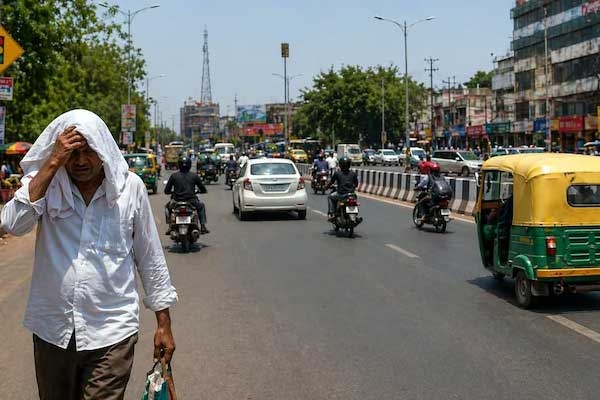
With the India Meteorological Department (IMD) signaling that heatwaves will be worse than usual in eastern, central, and southern India from April to June, residents are preparing for a summer that might break heat records. Central India is already seeing temperatures between 42 and 45 degrees Celsius, but there are some lesser-known elements that influence how different people feel the heat. Humidity is especially important, according to scientists. The human body's main way of combatting heat is through sweating. When sweat evaporates from the skin, it takes heat away, providing cooling for the body. In dry heat, like what's happening in Delhi and Rajasthan, this process works effectively, helping many withstand the rising temperatures. However, things become more difficult when the air gets humid.
In humid conditions, the air is so full of moisture that sweat cannot evaporate. Without evaporation, there's no cooling, which can lead to higher heart rates, increased blood pressure, and in severe cases, even organ failure or death. Scientists use wet-bulb temperature (WBT) to measure this combined risk, which considers both heat and humidity, unlike regular thermometers that only show the air temperature. For many years, it was commonly believed that the human body could endure a WBT of up to 35 degrees Celsius, where sweating stops being effective. However, this belief was based more on theory than on actual data from people. This changed with the Penn State Human Environmental Age Thresholds (HEAT) Project, a significant study where human volunteers were placed in controlled environments, swallowed small sensors to track their temperature, and then had the heat and humidity gradually increased while doing light activities like walking or cycling. The findings were concerning.
Researchers discovered that even healthy young adults began to struggle with temperature control at a WBT of only 31 degrees Celsius, which is much lower than the previously thought safety limit. To better understand this, a temperature of 38 degrees Celsius with 60% humidity can push the human body beyond its cooling capacity. The critical level for older individuals, those on medication, or anyone with health issues is even lower. “Understanding these maximum temperature and humidity limits allows us to prepare people—especially those who are more at risk—before a heatwave,” stated Professor W. Larry Kenney, who directed the project. In coastal cities in India, this combination is common during the pre-monsoon months.
Another study highlighted in Climate Dynamics, led by Akshay Deoras from the University of Reading, uses over 80 years of weather data to explain how moist heatwaves affect India. “People are often more aware of dry heatwaves in India due to the extremely hot summer months, but moist heat is less recognized and, therefore, more perilous,” Deoras explained to Ground Report, an environmental news outlet.
A study led by the IMD, which looked at data from 1981 to 2020, discovered that wet-bulb temperatures have gone up in every season along India's coastlines. The monsoon, which was previously thought to provide relief, is now identified as a major factor contributing to this issue. During times when the monsoon is active, the risk of humid heat in northern India can rise by as much as 125% over normal levels. When the monsoon takes a break, this risk moves southward. Although cloud cover decreases, moisture remains, making peninsular India, including Kerala, particularly susceptible. Moreover, one study suggests that by the end of the century, around 70% of Indians might face a wet-bulb temperature of 32 degrees Celsius or higher. In such a situation, roughly 2% of the population, which amounts to tens of millions of individuals, may exceed the dangerous threshold of 35 degrees Celsius, which is nearly always fatal.
These dangers are becoming increasingly concerning as the summer of 2026 is anticipated to be exceptionally hot. The IMD has already forecasted higher-than-normal heatwave days from April to June in regions such as east, central, northwest, and southeast peninsular India, with experts cautioning that it might be hotter than the record-setting summer of 2024. Scientists have emphasized that simply monitoring temperature is no longer sufficient. For India, a country known for its humidity, coastal environment, and monsoon rains, the most hazardous heat can often seem less threatening. "It's like temperatures of 40 degrees Celsius feel as harsh as 50 degrees Celsius," remarked IPCC author Anjal Prakash. "As climate change causes wet-bulb temperatures to exceed 35 degrees Celsius, living without air conditioning becomes impossible. Be cautious this summer, as India is likely to experience more intense heat waves".