(Image source from: Aljazeera.com)
It has been a week since the United States and Israel began their joint attacks on Iran, taking out much of its top leadership, including Supreme Leader Ayatollah Ali Khamenei, and causing the Middle East to face its most severe crisis in many years. What started on a Saturday morning (February 28) aiming to strike at Iran's leaders, nuclear sites, and missile locations quickly escalated into a regional emergency involving countries around the Gulf, who have been hit hard by Iran's counterattacks. In just a week, fighting has extended across different areas, with Iranian allied groups like Hezbollah and the Houthis also aiming attacks at Israel, which has retaliated by striking Beirut in Lebanon. This has resulted in close to 1,200 fatalities in Iran, which sadly includes 165 schoolgirls. Moreover, 87 sailors lost their lives when a US submarine attacked an unarmed Iranian warship in the Indian Ocean, bringing the conflict nearer to India. Wars also bring economic hardships. With the Strait of Hormuz, through which a fifth of global oil travels, largely closed, the situation has upset energy markets and caused crude oil prices to surge. Importantly, there appears to be no clear conclusion in sight, with the US cautioning that the bombings might "intensify sharply. "
The conflict started with a joint attack by the US and Israel on Iran. The operation, known as Epic Fury by the US and Roaring Lion by Israel, included over 100 planes and significant missile strikes, particularly targeting government structures, the President's residence, and the Supreme Leader's office. Khamenei was killed in one of these assaults. An attack on a school in Iran’s Minab resulted in the deaths of 165 girls, marking the most devastating loss of life in this war so far. In retaliation, Iran launched missiles and drones towards Israel and American military bases in the Gulf. Well-known tourist locations in Dubai were also hit.
The conflict area expanded as the US turned its focus to Iran’s navy, sinking nine ships and damaging its headquarters. The base of Iran's powerful Islamic Revolutionary Guard Corps (IRGC) was also struck. However, the US experienced its own losses when an Iranian drone targeted a US military site in Kuwait, killing six service members. Additionally, an Iranian missile hit the Israeli town of Beit Shemesh, resulting in nine deaths.
The fighting escalated on Monday when the Lebanese militant group Hezbollah fired missiles into Israel, prompting Israel to launch a series of attacks on Beirut, which resulted in 31 fatalities. Meanwhile, Iran targeted oil facilities in the Gulf, specifically aiming at Saudi Arabia's Ras Tanura refinery. The US faced further losses as three of its military planes crashed in Kuwait in what they described as an apparent "friendly fire" incident, although the pilots were able to eject safely.
The United States has increased its military actions against Iran, sending "bunker buster" B-2 bombers into action, while Israel kept attacking Iranian military locations and Hezbollah. As Iran found itself more and more alone, it shut down the Strait of Hormuz, which threatens almost 20% of the world's oil shipments. It also launched drones aimed at US embassies in Riyadh and Kuwait, forcing both to close. In addition, explosions were reported in Doha, Dubai, Abu Dhabi, Bahrain, and Kuwait as air defenses intercepted missiles launched by Iran.
The conflict intensified significantly. A NATO defense system shot down an Iranian missile heading toward Turkey, while a US submarine targeted and sank an unarmed Iranian warship in the Indian Ocean. This event, which occurred while the IRIS Dena was coming back from a naval drill in India, led to the deaths of 87 Iranian sailors. Furthermore, several European countries sent military resources to the area to safeguard their interests.
On this day, the first air-to-air victory in the war occurred when an Israeli F-35 fighter plane shot down an Iranian Su-35 over Tehran during a skirmish. In response to the sinking of the IRIS Dena, Iran attacked a US tanker in the Persian Gulf. Additionally, Azerbaijan became the first nation in the Caucasus to be struck by Iran, as four individuals were hurt when a drone hit a building at an airport in Nakhchivan, although Iran denied any involvement.
Missiles continued to fly across the Middle East, with Israel announcing that it had started a major campaign of strikes in Tehran and Lebanon. Iran, on the other hand, launched a drone and missile operation targeting the “heart” of Tel Aviv. The war, now in its seventh day, has caused major disruptions in travel. CNN reported that over 11,000 flights in the area have been cancelled since February 28 after multiple Gulf nations closed their airspace. It's important to know that cities like Dubai are crucial transit points for worldwide travel. Nevertheless, in the last two days, some Gulf airlines have restarted services, mainly focused on evacuation.
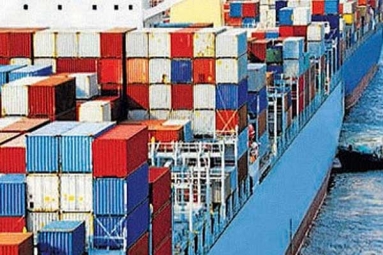
Importantly, the war has disrupted global energy supplies, especially due to the closure of the Strait of Hormuz. As previously mentioned, one-fifth of the world's oil flows through this narrow channel. The effects have been swift. Crude oil prices have risen by more than 10%, reaching their highest point since the summer of 2024. Prices for natural gas in Europe and Asia, which depend a lot on imported LNG from the Middle East, have increased even more sharply. However, the US has made some concessions. Trump has given India a 30-day allowance to purchase Russian oil. He also announced that the US would offer naval escorts to safeguard tankers. Additionally, the US will provide "political risk insurance" for oil and gas tankers operating through the Strait of Hormuz.
Since February 28, the conflict has intensified daily, currently impacting about 14 nations in the Middle East and other regions. Recently, it appears that Iran's response has slowed down. The US Central Command reported that attacks from Iranian ballistic missiles have dropped by 90% and drone strikes by 83%, according to CNN. Additionally, Israel has stated it has achieved "almost complete control of the skies," claiming to have eliminated 80% of Iran's air defense capabilities. However, despite losing its top leaders, Iran has continued to resist strongly and retaliate throughout the region. A key part of Iran's approach has been to extend the conflict and exhaust Israel's expensive air defenses by launching low-cost drones and missiles. The Shahed-136 "kamikaze" drone has played a significant role in Iran's attacks. Therefore, Iran's plan has been to compel the US and Israel to defend several fronts, involve Gulf nations, and gradually increase the economic burden of the war by obstructing the Strait of Hormuz.
Neither Israel nor the US has provided a specific timeline. It seems that the US does not have a clear end goal either. Trump has given mixed signals regarding how long the conflict might continue. After the initial attacks, Trump suggested the fighting could conclude in two to three days. The next day, he changed his estimate to four weeks. The most recent comments came from Defence Secretary Pete Hegseth, who emphasized that there should never be a set timeframe. It now remains uncertain which side will yield first or if a larger war may occur.