For many years, every communication satellite that transmitted India's TV broadcasts, phone conversations, and internet was created by the government. This is about to change. Ananth Technologies, a company based in Hyderabad that has participated in the creation of over 109 satellites and 89 launch vehicles since 1992, is currently working on AnanthSat-1, the first communication satellite produced by a private Indian business. Dr Subba Rao Pavuluri, the chairman and managing director, who also leads the Satcom Industry Association – India (SIA-India), informed IndiaToday.in during the India Space Congress in New Delhi this week that the satellite is set to launch in 2029. This development stems from reforms that allowed private companies into India's space industry only a few years back. Prior to this, only the Indian Space Research Organisation (Isro) was responsible for building and managing communication satellites.
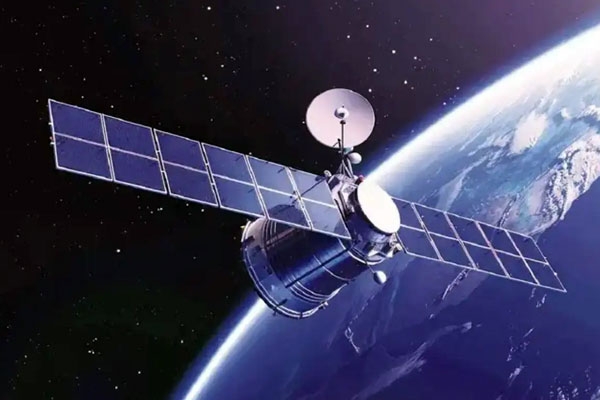
The satellite will orbit the Earth in a geostationary position. This orbit is located about 36,000 kilometers above the equator, where a satellite revolves around the planet at the same speed that the Earth rotates, making it appear to stay in one spot from the ground. In simpler terms, a geostationary satellite takes 24 hours to complete one full orbit of the Earth. This is why a dish on your roof remains stationary. AnanthSat-1 has been assigned a position at 89 degrees east, along with the necessary radio spectrum. It will operate within the Ka-band, a high-frequency range of radio waves that can transmit far more data than the frequencies older satellites used. In simpler terms, the Ka-band enables fast and heavy internet to be delivered from space. AnanthSat-1 is classified as a high-throughput satellite, meaning it is engineered to transmit much more data compared to a typical communication satellite of similar size. It will provide over 100 Gbps, or gigabits per second, which indicates how much information it can transfer at once. The demand is substantial.
Dr Pavuluri referred to a government estimate indicating that India needs over 1,000 Gbps of satellite bandwidth, a gap that private companies are now being called to help fill. The aim of having this extra capacity is to extend coverage. Ananth wants the satellite to provide broadband access to areas where regular networks have difficulties, such as remote villages and hilly regions where installing cables and towers is challenging. Additionally, Dr Pavuluri mentioned that the same bandwidth could support tele-education and telemedicine, allowing a specialist doctor in a city to assist a patient in a distant area or a teacher to connect with a classroom that lacks resources. The satellite will also be used by the Navy, Air Force, and Army, along with civilian users. Ananth intends to build and test the satellite in India, going through a process known as AIT, which stands for assembly, integration, and testing, before launching it with an Indian rocket.
Based on its final weight, the rocket being planned might be the large LVM3 or the lighter PSLV or SSLV, which are the launch systems used by Isro to send satellites of various sizes into space. It will launch as a joint mission that includes other satellites as well. For Dr Pavuluri, who departed from Isro in 1991 to establish a private space firm when India did not have one, this is a dream he has had for a long time: to turn the country from merely using satellites to being a nation that produces them for the entire world.