(Image source from: AP)
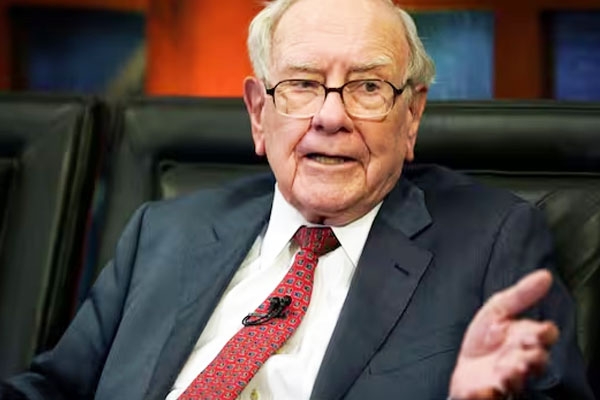
In a significant development, Warren Buffett, the famous billionaire investor in his nineties, has resigned from his position as CEO of Berkshire Hathaway, marking the end of over sixty years in that role. He has been a guiding figure in the global investment scene worldwide. In a special chat with CNBC's Becky Quick, Buffett mentioned that the company, which he changed from a struggling textile firm into a trillion-dollar business that includes insurance, railroads, and consumer goods, will now be run by Greg Abel. Abel has been seen as Buffett's preferred successor for a long time, and the official transfer took place last Thursday. Even though Buffett is no longer the CEO, he will keep his position as Chairman of the Board. He indicated that he will still come to the office, but his involvement will be less active and more private. He may not be part of the daily decisions anymore, which will now be fully handled by Abel. Buffett shared that Abel is the one who will be making decisions, calling him the person he trusts the most to manage finances and direct the company's future.
During the CNBC interview, Buffett strongly praised Abel's judgment and personality. He mentioned that he would prefer Abel to take care of his money over some of the most well-known investment advisors or business leaders in the U. S. Buffett also wanted to comfort shareholders by describing Abel as a practical and down-to-earth person. He noted that Abel lives an ordinary life, plays ice hockey with his kids, and does not crave celebrity or attention. Instead, he will keep working in the same steady manner that has characterized him for many years. One of the most notable changes is that Buffett will not speak at Berkshire's annual shareholder meeting this year. For many years, this event in Omaha has been a significant occasion, attracting tens of thousands of attendees who came to listen to Buffett's opinions. This time, he will be seated with the directors instead of addressing the crowd. This is the most obvious indication so far that the Abel era has started.
Buffett has mentioned that Berkshire is in a stronger position than any other firm to thrive for the next century. He thinks that with Abel in charge, the company will continue to grow and provide better returns for both shareholders and employees. Even though Buffett's role has changed, the company's principles and methods of operation stay consistent. After the announcement of Buffett’s retirement, Berkshire Hathaway shares saw a slight drop, yet the company continues to be one of the most successful investments in history, with share prices rising over 4,000,000% since he took over in 1965. Currently, Class A shares are priced at roughly 744,120 dollars. The shares of Berkshire Hathaway class A (BRK. A) have shown solid long-term growth: increasing about 10.85% in the last year, 117.01% over five years, and 226.47% in ten years. The firm offers two kinds of common stock: Class A (BRK. A) and Class B (BRK. B). Class A shares were the first ones issued when Warren Buffett started developing Berkshire in the 1960s. These shares are known for their very high price - currently around 744,000 dollars each - because Buffett has never approved a split for them. Holding a Class A share gives the owner one vote in decisions made by shareholders. On the other hand, Class B shares - which were introduced in 1996 - are cheaper and aimed at smaller investors. They provide only 1/10,000th of the voting power of a Class A share and cost much less (currently about 500 dollars a share). Class A shares can be turned into Class B shares whenever needed, but not the reverse. This gives Class A shareholders the option to sell a part of their investment without losing all their voting rights.