(Image source from: Zeebiz.com)
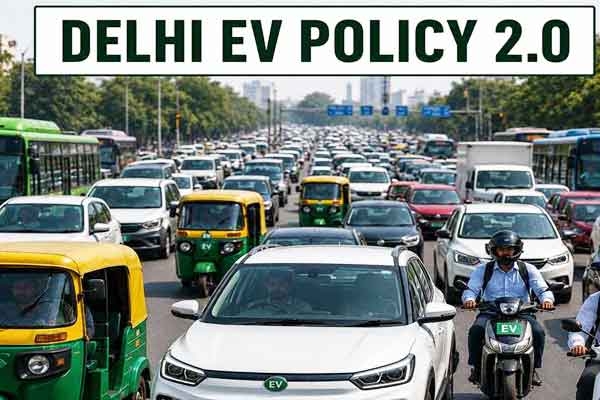
Delhi has made its largest investment in electric transportation yet, but it’s not about cars. The city’s new EV Policy 2.0 focuses on the vehicles that are most commonly seen on its streets every day — motorcycles, scooters, and auto-rickshaws. The reasoning is straightforward. To achieve cleaner air and reduce emissions, Delhi needs to convert the vehicles that people rely on the most to electric ones. The policy outlines an ambitious plan. It includes introducing electric auto-rickshaws and promoting electric two-wheelers as the main choice in the upcoming years, indicating that the next stage of India's electric vehicle development will focus on widespread acceptance rather than just specialized buyers. Experts in the industry believe this policy is a positive move, but they warn that incentives alone are not sufficient. Factors like charging stations, financing options, after-sales service, and customers' trust will play a crucial role in the success of the policy implementation. Two-wheelers make up the largest portion of vehicles on Delhi's roads. Each day, millions of people use motorcycles and scooters for work, education, and daily transportation. Electrifying this sector could lead to a much larger environmental benefit compared to just targeting passenger cars.
Madhumita Agrawal, the Founder and CEO of Oben Electric, stated that motorcycles are "the core of personal transport" and represent the largest chance to advance electric transportation on a large scale. She mentioned that Delhi's EV Policy 2.0 provides a clear plan by combining incentives for consumers, increasing charging infrastructure, and making long-term investments in the ecosystem. According to her, this certainty in policy gives both consumers and manufacturers the assurance they need to invest in electric vehicles. Agrawal pointed out that the responsibility of the industry now goes beyond just producing electric motorcycles; manufacturers must create bikes that are able to truly compete with petrol bikes in terms of performance, safety, dependability, and the overall ownership experience. In China, when the government aimed to encourage a shift to electric vehicles, it made license plates for gasoline vehicles excessively costly, making them unaffordable for many. Consequently, many Chinese people turned to electric vehicles. This policy was implemented in different regions one at a time. Now, the roads in Beijing are much quieter, and the air quality is better than it was ten years ago.
For various reasons, India cannot impose such severe regulations. However, Delhi's EV policy could have a similarly disruptive impact, potentially even more so, as the effects will vary among different participants. Major manufacturers of two-wheelers will need to adapt and compete with companies that have focused on electric scooters since the beginning. While large corporations like Honda, Bajaj, Hero, and TVS have started to offer electric vehicle options, most of their profits still come from gasoline-powered vehicles. Additionally, large companies find it more challenging to change quickly compared to smaller businesses. Commenting on this, Naveen Gupta, the Founder and CEO of Trev Mobility, remarked, "This policy is limited to Delhi, so any financial impacts will likely not be significant. Moreover, these companies already have investments in electric vehicles. For example, Hero has a notable investment in Ather. " Besides vehicle manufacturers, owners of repair shops may also feel the effects of Delhi's push for electric vehicles.
Their source of income mainly relies on maintaining combustion engines. When asked about their ability to switch smoothly to electric vehicle repairs, Gupta responded, "They can continue to handle brakes and suspension, but not engines. Electric vehicle systems are quite different from combustion engines and are like a closed system. It might be challenging at first, but individuals will need to adjust. "
He continued, "In general, Delhi's new electric vehicle policy is a beneficial move. The residents of Delhi-NCR deserve cleaner air, and this policy is a step towards that goal. China encountered a similar issue and has successfully managed to reduce pollution over time. " For many within the sector, the recent policy in Delhi signifies a change in mindset. Rather than just motivating people to purchase electric vehicles, it seeks to create an environment where electric vehicles become the primary form of transportation. Hari Krishna, the Founder and CEO of Green Drive Mobility, mentioned that the gradual shift towards allowing only electric auto-rickshaws by 2027 and electric two-wheelers by 2028 provides important clarity in policy. He also noted the planned investment of Rs 15,000 crore over the next four years as a sign of Delhi's dedication to electric mobility for the long haul.
Nonetheless, Krishna emphasized that policy announcements need to be matched by actual implementation. He pointed out that expanding charging stations, enhancing financing options, improving after-sales service, and ensuring smooth execution will be essential to build trust among consumers and help businesses grow.
The influence of this policy is likely to be felt more intensely in commercial transportation. Ride-hailing services, rental agencies, and shared mobility firms travel significantly more distance than personal vehicles. Therefore, electrifying these fleets can lead to a faster decrease in emissions. Naveen Gupta considers the electrification of fleets to be a crucial part of the new approach. He remarked that shared mobility operators are vital in urban transport, making them key players in improving air quality and reducing reliance on traditional fuel sources. However, Gupta contended that merely exchanging petrol vehicles for electric ones is insufficient. The entire ecosystem surrounding electric vehicles must develop at the same time. This means establishing dependable charging infrastructure, enhancing vehicle usage strategies, providing financial aid, ensuring drivers are on board, and boosting consumer confidence. He stated that the next stage of India’s transition to electric vehicles will focus on providing mobility solutions that are trustworthy, easy to use, and experience-oriented, instead of just increasing the number of electric vehicles on the streets.
If carried out effectively, the policy has the potential to transform the daily commuting habits of millions while opening new avenues for manufacturers, charging service providers, fleet management companies, and financing organizations. The real test starts now. While perks for consumers might encourage some to buy early, the ongoing use of electric vehicles will rely on how quickly charging stations grow, how simple financing is, and how easy it is to own an electric vehicle compared to a gas one. For Delhi, the effectiveness of the strategy won’t be judged only by how many electric cars are sold. It will be based on whether using electric transport becomes the most simple and practical option for daily travelers. "This initiative could greatly speed up the adoption of electric scooters, cut down on vehicle pollution, and aid the city’s larger goals for sustainability. With the proper support system, Delhi can lead the way for electric transportation in all of India," stated Ayush Lohia, the CEO of Youdha.