(Image source from: Canva.com)
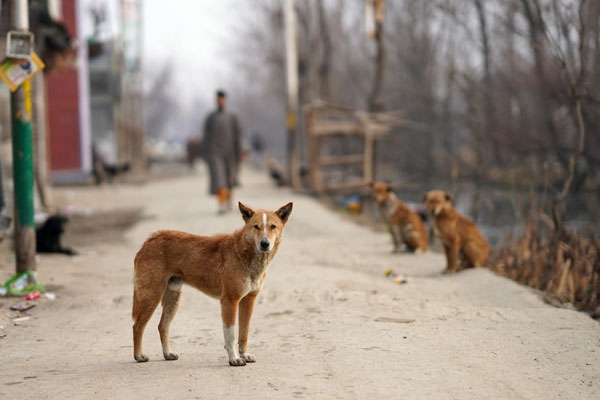
Hearing requests that dispute the Supreme Court's decision to round up all stray dogs in Delhi NCR and relocate them to shelters, a different panel of the court inquired today about why officials in various regions began collecting the animals even before the previous order was made public. The court also criticized the authorities for failing to follow guidelines regarding animal control, which has led to this problem.
The panel led by Justice Vikram Nath, Justice Sandeep Mehta, and Justice NV Anjaria examined the issue this morning after an order from August 11 by a two-judge panel, Justice JB Pardiwala and Justice R Mahadevan, caused significant unrest, prompting animal rights advocates to take to the streets in protest against the directive to remove strays from neighborhoods. Representing the Delhi government, Solicitor General of India Tushar Mehta highlighted cases of stray dog attacks on children that resulted in injuries and even deaths from rabies. "Children are dying. Just sterilization won't prevent rabies," he mentioned.
Mr. Mehta stressed that "nobody dislikes animals." "Among 100 dogs, there are four dangerous types. We don’t keep those at home. Dogs don’t need to be killed; they need to be kept apart," he said, presenting government statistics showing 37 lakh dog bite incidents last year. "Parents can’t allow their kids to play outside. Young girls suffer injuries," he contended. The solution, according to Mr. Mehta, lies beyond existing regulations. "The court needs to step in." Senior Advocate Kapil Sibal, representing the animal welfare organization Project Kindness, remarked, "This is the first time I’ve heard the Solicitor General suggesting that laws exist but shouldn’t be followed. There are no shelters. The question is whether the municipal corporation has built shelters. Now dogs are being rounded up. This matter needs comprehensive discussion. Let the suo motu order be put on hold," he added. The August 11 ruling by the other panel followed the court's consideration of a news article concerning the increase in dog bite incidences in Delhi.
Arguing against the practicality of the order to relocate all stray dogs in Delhi NCR, Mr. Sibal stated, "This order can’t be executed since no shelter homes are available. The order states that stray dogs should not be let loose. This also doesn’t apply since there are no shelters for them. The mandate to collect stray dogs should also be paused. Where will they go?" Concerned that stray dogs might be killed once taken away, Mr. Sibal indicated, "They will be confined with food provided, and they will fight among themselves. This is a disaster. This cannot happen." Senior Advocate Abhishek Singhvi, representing one of the petitions, pointed out that all instructions in the August 11 order "position things incorrectly." "All instructions assume certain conditions; the provided infrastructure is far less than needed to house all the dogs." He acknowledged that dog bites are "unfortunate," but insisted, "you can't create such a terrifying situation." The senior lawyer noted that "well-intentioned" orders can sometimes "overstep legal boundaries."
Justice Nath strongly criticized the city officials and mentioned that while the Parliament creates rules and laws, they are not put into action. "On one side, people are in pain, and on the other side, there are animal advocates present," he stated. The court held back its decision.