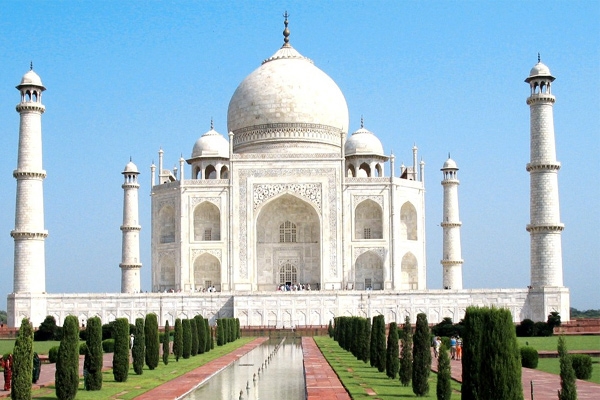
(Image source from: Taj Mahal threatened by crematorium })
India's world famous monument the Taj Mahal is facing a unique threat – from a crematorium. The historical monument faces environmental hazards from the toxicity generated by the funeral pyres.
The crematorium named Moksh Dham sees nearly 20-25 cremations in a day, according to reports. Moksh Dham is located between the Taj Mahal and Agra Fort.
Moksh Dham, which is in the viscinity of the Taj Mahal, has attracted the attention of environmentalists. The crematorium has a polluting effect on the monument due to the constant burning of wood, human flesh and clothes.
According to environmentalists, the crematorium releases harmful gases in air. The burning of funeral pyre releases heavy metals in air. And in case the dead bodies have mercury filling in teeth, it poses hazard to people living in the locality.
However, the officials at the crematorium deny that Moksh Dham has been causing pollution in the viscinity.
The Taj Mahal is located on the bank of the river Yamuna, at Agra in the Indian state of Uttar Pradesh. The historical monument attract more than 3 million tourists to India each year.
Taj Mahal was built by Mughal emperor Shah Jahan in the 17th century. History suggests that more than 20,000 workers were engaged to build the white marble mausoleum that took 17 years to finish it.
The historical monument has been affected by increasing pollution from the industrial city of Agra and an oil refinery located nearby. Due to the pollution, the white marble is becoming yellowish and losing its sheen. To counter the effect of pollution, the iconic Taj Mahal has been given a mud-pack at three instances – in 1994, 2001 and 2008. Talks are on to give another mud pack to the historical monument.
(AW: Pratima Tigga)