(Image source from: Economictimes.indiatimes.com)
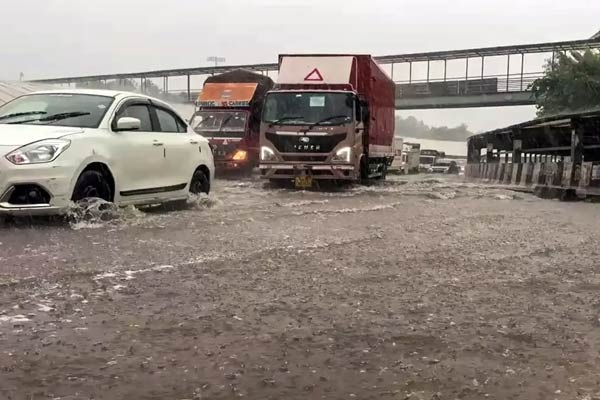
Heavy rainfall on Monday evening caused flooding in Gurugram, leading the local government to instruct corporate offices and schools to switch to online operations for Tuesday. The District Disaster Management Authority reported that more than 100 mm of rain fell between 3 pm and 7 pm on September 1, prompting the India Meteorological Department to issue an orange alert for September 2 due to the expectation of heavy to very heavy rain. This significant rain created major waterlogging issues at important spots such as IFFCO Chowk, Rajiv Chowk, and Sohna Road. Vehicles moved sluggishly on National Highway-48 late into the night, with cars, trucks, and motorcycles trapped for hours. Footage posted online by travelers depicted vehicles stuck and individuals wading through water up to their waist. At the Sikanderpur Metro station, which handles a large amount of traffic, crowds had trouble getting through the flooded entrance. There were also reports of water leaking from the ceiling at the underpass near Signature Tower Chowk.
As the rain persisted, Gurugram’s Deputy Commissioner Ajay Kumar instructed all private companies to let their workers operate from home on Tuesday and directed schools to conduct classes online. He shared this information on X, urging residents to “be careful due to the weather, avoid going outside unless necessary, and adhere to the guidelines set by the authorities.” Police Commissioner Vikas Arora and the Deputy Commissioner inspected NH-48 and Sohna Road late at night to evaluate the situation. In Delhi, sporadic rain on Monday caused traffic delays and impacted airport and metro services. At Palam, visibility decreased from 2,500 meters at 2:30 pm to 800 meters by 3 pm, compelling airlines to release travel advisories. Air India and IndiGo warned travelers about potential delays and advised them to check their flight status before going to the airport. Metro services saw interruptions on the Blue Line, especially between the Indraprastha and Barakhamba Road stations. Traffic jams were also noted at the Delhi-Gurugram border.
In another development, the Yamuna River surpassed the danger level of 205.33 meters, reaching 205.75 meters at the Old Railway Bridge on Tuesday morning. Officials indicated that the water level was nearing the evacuation limit of 206 meters. The District Magistrate of Shahdara announced that all traffic and public movement would be halted on Loha Pul (Old Iron Bridge) starting at 5 pm on Tuesday. The Central Water Commission reported the release of 292,365 cusecs of water from the Hathni Kund Barrage, 41,830 cusecs at Wazirabad, and 56,455 cusecs at Okhla. By 9 am Tuesday, the release from Hathni Kund had increased to 329,000 cusecs. The IMD predicts that Delhi-NCR will experience cloudy weather with light to moderate rain or thunderstorms from September 2 to 4. On Tuesday, some areas may see moderate rainfall, with daytime temperatures expected to be between 30-32 degrees Celsius and nighttime lows of 21-23 degrees Celsius, which is 3-5 degrees Celsius below the average.
Private weather service Skymet mentioned that the rains are influenced by both the monsoon and an unusually active western disturbance. Mahesh Palawat, vice-president of meteorology and climate change, stated that “Delhi will continue to experience intermittent rain until September 5.”