(Image source from: Canva.com)
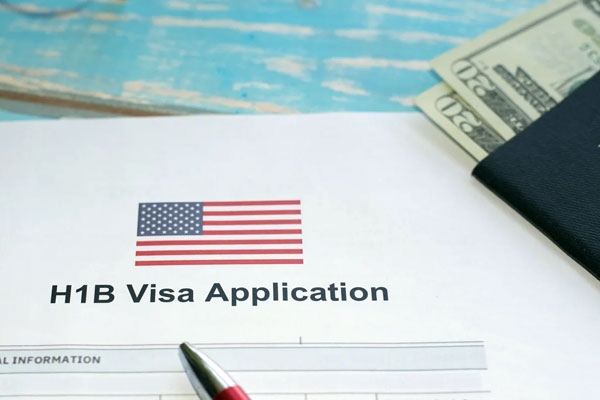
US Citizenship and Immigration Services has announced that starting March 1, there will be a rise in fees for premium processing on several immigration benefits, including the H-1B visa. USCIS explained that this increase in the premium processing fee is meant to account for inflation from June 2023 to June 2025.
These changes will impact important applications for employment and non-immigrant statuses commonly used by foreign workers, particularly those from India who are working or studying in the U. S. According to the new fee structure, the cost for premium processing of Form I-129 petitions for H-2B or R-1 nonimmigrant status will go up from $1,685 to $1,780. The premium processing fee for all other types of Form I-129, such as H-1B, L-1, O-1, P-1, and TN visas, will increase from $2,805 to $2,965.
The premium processing fee of $2,965 will also apply to Form I-140 immigrant petitions for foreign workers in various employment categories, which is an increase from the previous fee of $2,805, according to USCIS. Additionally, certain applications for extending or changing nonimmigrant status will also see fee increases. For Form I-539 applications that cover F-1 and F-2 students, J-1 and J-2 exchange visitors, and M-1 and M-2 vocational students, the fee will rise from $1,965 to $2,075. For individuals seeking quicker employment authorization, USCIS stated that the premium processing fee for Form I-765 applications, which includes Optional Practical Training (OPT) and STEM-OPT categories, will go up from $1,685 to $1,780. USCIS highlighted that the additional funds would help with the agency’s operations. “The money raised from this fee increase will be used to provide premium processing services; improve processing methods; address processing demands, including backlogs; and support USCIS adjudication and naturalization services,” the announcement said.
These new fee increases are likely to directly affect Indian professionals, students, and employers, who represent a significant portion of H-1B, L-1, employment-based green card, and OPT applications. Premium processing is frequently utilized by employers and applicants who want quicker decisions for job changes, extensions, travel arrangements, and confirming their status. Indian nationals are the largest recipients of U. S. employment-based visas, especially in the H-1B program, and they also represent a major part of the backlog for employment-based green cards. Optional Practical Training and STEM-OPT extensions are heavily utilized by Indian students graduating from U. S. universities as a way to transition to longer work visas such as the H-1B.