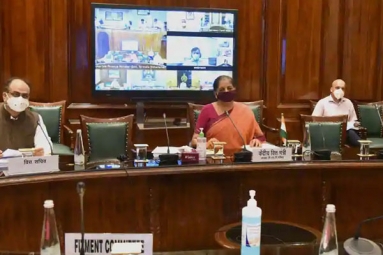
(Image source from: x.com/FinMinIndia)
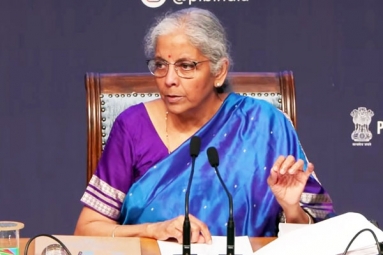
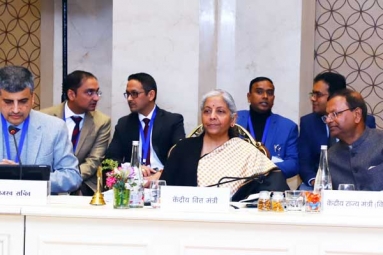
The Goods and Services Tax Council, headed by Finance Minister Nirmala Sitharaman, is starting a two-day meeting today to talk about changing to a system with two tax rates. This shift is aimed at lowering the cost of everyday goods by decreasing the tax categories that most items fall under. The council consists of finance ministers from states and Union Territories, and they will explore suggestions for simplifying tax rates, which Prime Minister Narendra Modi referred to as 'next-generation' reforms. They will also consider issues related to the compensation cess and health as well as life insurance. A two-rate structure has been suggested at five percent and eighteen percent. Items will be classified as 'merit' or 'standard,' with those in the latter group subject to the lower tax rate. Additionally, a special 'sin tax' of forty percent will be imposed on specific goods, such as tobacco. Currently, there are four tax brackets: five, twelve, eighteen, and twenty-eight percent. The government intends to move ninety percent of items in the twenty-eight percent category down to eighteen percent and reduce many from twelve percent to five percent. This is believed to encourage spending by the middle class and counteract the expected revenue loss of fifty thousand crore rupees.
There is also a suggestion to remove GST from life and health insurance premiums, which currently have an eighteen percent tax. Tobacco products, expensive cars, and alcohol are likely to fall under the 'sin goods' category and face a Health Cess, which has been proposed along with a Green Energy Cess to replace the soon-to-expire Compensation Cess. This adjustment is anticipated to help mitigate, at least in part, the effects of Donald Trump's fifty percent tariffs. These tariffs might impact about forty-eight billion dollars in Indian products exported to the US, which could affect Indian companies and employment. The GST reform and the anticipated increase in spending by the government are expected to influence economic growth further, especially after a favorable report from global ratings agency Standard and Poor. Last week, the government announced that the GDP grew by seven point eight percent in the first quarter of the current fiscal year, known as FY26, compared to a six point five percent prediction.
A recent report from SBI Research indicated that reforms in GST, along with recent cuts in income tax, might boost consumption by five point thirty-one lakh crore rupees, which is about one point six percent of GDP. The government stated that this revision is founded on three main ideas: structural reforms, simplifying rates, and enhancing quality of life. This approach aligns with their efforts to make India 'aatmanirbhar,' or self-sufficient, while striving to become the third-largest economy in the world. However, the suggested changes to GST have been met with doubt by states governed by the opposition, with concerns over potential revenue losses and requests for compensation for the financial setbacks they anticipate. Eight state finance ministers, including ones from Tamil Nadu, Punjab, and Bengal, will present their ideas to the council. Their suggestion for balancing tax simplification and maintaining revenue involves adding an extra duty on sin and luxury products, in addition to the proposed forty percent rate.