(Image source from: Msn.com)
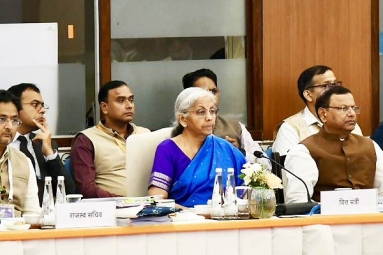
The Goods and Services Tax (GST) Council on Wednesday agreed to completely change India's consumption tax system since it started in 2017. This change greatly reduces taxes on everyday necessities, medications, small cars, and home appliances, impacting items from toothpaste and insurance to tractors and cement. The council decided to change the tax rates by reducing them to only two levels: 5 percent and 18 percent. The government aims to encourage more spending within the country and lessen the economic impact of the US tariffs on Indian products. Previously, there were four tax slabs - 5, 12, 18, and 28 percent - which are now simplified to just two rates of 5 percent and 18 percent. There is also a special 40 percent tax rate proposed for certain luxury items like expensive cars, tobacco, and cigarettes. The new tax rates for all goods, except for certain tobacco products, will start on September 22.
What Will Be Cheaper?
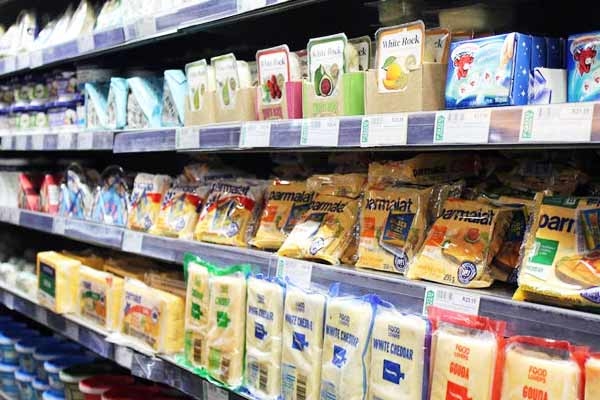
Food and drink: All types of chapati and paranthas will now have no tax, down from 5 percent. The tax on ultra-high temperature milk, chena or paneer, pizza bread, and khakra has also been lowered to nil from 5 percent. Everyday food and drink items like butter, ghee, dried fruits, condensed milk, sausages, meats, sugar candies, jam, fruit jellies, tender coconut water, snacks, drinking water in 20-litre bottles, fruit pulp or juice, milk drinks, ice cream, pastries, biscuits, corn flakes, and cereals will see a tax reduction to 5 percent from the previous 18 percent. The tax on other fats and cheese has been cut down to 5 percent from 12 percent. Plant-based milk drinks will see their GST rate drop to 5 percent from 18 percent, and soya milk drinks will now also be taxed at 5 percent instead of 12 percent.
Household goods: Products like tooth powder, feeding bottles, tableware, kitchen items, umbrellas, utensils, bicycles, bamboo furniture, and combs will now have a reduced rate of 5 percent instead of 12 percent.
Shampoo, talcum powder, toothpaste, toothbrushes, face powder, soap, and hair oil will also see a reduced tax rate of 5 percent from the previous 18 percent.
Home electronics: Household electronics, including air conditioners, dishwashers, and TVs, will now be taxed at 18 percent instead of the previous 28 percent.
Stationery: Items such as maps, charts, globes, pencils, sharpeners, crayons, pastels, exercise books, and notebooks will now have no tax instead of 12 percent. Erasers will also see no tax rate instead of 5 percent.
Footwear and textiles: The tax on footwear and fabric has been reduced from 12 percent to 5 percent, making these mass-market products cheaper.
Healthcare: Prices for lifesaving medicines, health-related items, and certain medical tools have been decreased from 12 or 18 percent to as low as 5 percent or even nothing. The tax on thermometers has dropped from 18 percent to 5 percent. Taxes on medical-grade oxygen, diagnostic kits and reagents, glucometers, test strips, and corrective glasses have also been lowered from 12 percent to 5 percent.
Insurance and policies: Personal life and health insurance plans will now have no tax. Third-party insurance services for transporting goods will now be taxed at 5 percent, down from 12 percent, but it will still allow for input tax credit (ITC).
Hotel tariffs and flights: The Goods and Services Tax (GST) for hotels has decreased from 12 percent with ITC to 5 percent without ITC. The tax on hotel rooms costing up to 7,500 rupees has been lowered to 5 percent. Economy class flight tickets will now only incur a GST of 5 percent.
Vehicles and auto parts: The tax on motorcycles with engines up to 350 cc will be reduced to 18 percent, down from the current 28 percent. Smaller hybrid cars will also get this benefit, while electric vehicles will still have a GST of 5 percent. The tax on auto parts will be cut to 18 percent from the existing 28 percent rate.
Fuel usage: Cars running on petrol, LPG, and CNG with engine sizes below 1,200 cc and lengths under 4,000 mm, as well as diesel vehicles with engines up to 1,500 cc and similar lengths, will see a tax change to 18 percent from 28 percent.
Construction: The cost of cement will drop as the tax rate lowers from 28 percent to 18 percent.
Sewing machines and parts: The GST rate for sewing machines has been reduced from 12 percent to 5 percent.
Agricultural machinery: Many types of agricultural machinery will have their tax decreased from 12 percent to 5 percent. This includes fixed-speed diesel engines not exceeding 15 HP, hand pumps, drip irrigation nozzles and sprinklers, soil preparation and harvesting machines, composting machines, and tractors (excluding road tractors for semi-trailers with engines over 1800 cc). The same rate applies to self-loading farm trailers and hand-operated vehicles like carts. The GST on important fertilizer supplies like sulphuric acid, nitric acid, and ammonia has decreased from 18 percent to 5 percent.
Several biopesticides, such as variations of Bacillus thuringiensis, Trichoderma viride, and neem-based pesticides, will become less expensive due to a GST cut from 12 percent to 5 percent. The GST has also been reduced to 5 percent for micronutrients regulated under the Fertiliser Control Order of 1985.
Comprehensive tractor parts, including back tractor tires and tubes, agricultural diesel engines with a cylinder capacity over 250 cc for tractors, hydraulic pumps for tractors, and many tractor components such as back wheel rims, center housing, transmission housing, front axle support, bumpers, brake systems, gearboxes, trans-axles, radiator assemblies, and cooling system parts, will be less expensive with a decrease in tax from 18 percent to 5 percent.
Beauty and wellness services: Activities from health clubs, salons, barbershops, fitness centers, yoga studios, and similar services will have a GST rate of 5 percent without input tax credit. Previously, these services had a GST of 18 percent.
What Becomes More Expensive?
Carbonated drinks: Well-known soft drinks like Coca-Cola and Pepsi, along with other non-alcoholic drinks, will see an increase in price, as the council has approved a rise in tax on fizzy drinks to 40 percent from the current 28 percent. Caffeinated drinks will also be taxed at 40 percent instead of 28 percent. Moreover, other non-alcoholic drinks will face a price hike since the GST rate has been raised to 40 percent from 18 percent. All products (including fizzy waters) that contain added sugar or sweeteners or are flavored will now be taxed at 40 percent, up from 28 percent.
Vehicles: All cars that have an engine size over 1,200 cc and are longer than 4,000 mm, as well as motorcycles over 350 cc, yachts, personal aircraft, and racing cars will incur a 40 percent tax.
Tobacco products: Tobacco and related items will remain under a GST rate of 28 percent plus a compensation Cess until the loans taken to help states recover from revenue losses during the Covid-19 pandemic are paid off. After this period, tobacco and its related products will be taxed at a rate of 40 percent.
Recreational services: A 40 percent tax will also apply to services provided by race clubs, rental services, and gambling activities such as casinos, horse racing, lotteries, and online gaming. IPL tickets will also be included in this category.