(Image source from: Timesofindia.indiatimes.com)
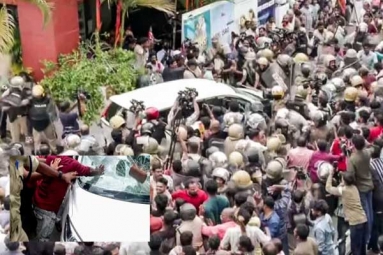
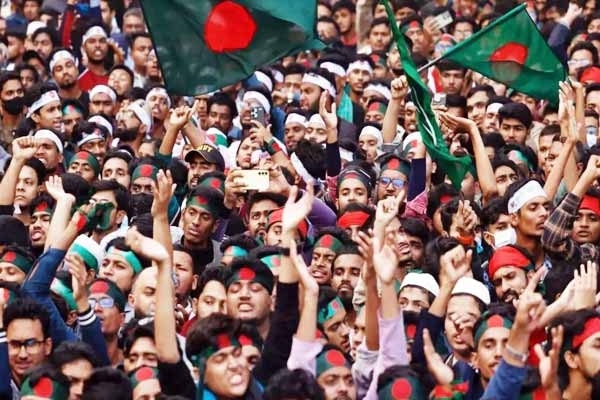
Violent demonstrations erupted in multiple cities in Bangladesh overnight following the passing of extremist leader Sharif Osman Hadi. Hadi, a divisive individual famous for his strong opposition to India, was 32 years old and became well-known during the 2024 student protests in Bangladesh, which resulted in the removal of former prime minister Sheikh Hasina. The spokesperson for the Inquilab Mancha group and a candidate in the upcoming elections was shot in the head by masked attackers last Friday while he was starting his election campaign in Dhaka, and he died later in a hospital in Singapore. When news of his death came out, thousands of demonstrators filled the streets of Dhaka and other cities to call for the arrest of those responsible for his murder. Authorities reported that several buildings in the capital city, including the offices of the two major media outlets, The Daily Star and Prothom Alo, were set ablaze, with staff members trapped inside.
The protests were filled with passionate chants honoring Hadi, with participants promising to keep their fight going and calling for quick justice and accountability for the attack that took his life. Tension remained high in various locations late into the night as extra police and paramilitary forces were sent in to stop more violence. The police had no immediate statement, while the fire department reported that the fire at the Daily Star was under control. There was also unrest reported in several other cities in Bangladesh, including the port city of Chittagong, where protesters gathered outside the Indian Assistant High Commission, shouting anti-India slogans. In Rajshahi, protesters set fire to the home of Bangabandhu Sheikh Mujibur Rahman and an Awami League office, causing significant destruction. This turmoil follows new anti-India demonstrations earlier this week, as relations between the two nations have worsened since Hasina went to Delhi. On Wednesday, hundreds of people under the title “July Oikya” (July Unity) marched toward the Indian High Commission in Dhaka, chanting against India and also demanding Hasina's return.
This week, India called in Bangladesh's High Commissioner in New Delhi, Muhammad Riaz Hamidullah, to file a formal diplomatic complaint about recent threats to the Indian High Commission in Dhaka and inflammatory remarks made by Bangladeshi political leaders against India. This action was taken after a leader from Bangladesh's National Citizen Party (NCP) threatened that Dhaka would provide support to anti-Delhi groups and help cut off India’s "seven sisters"—a term that refers to the northeastern states of India.
"Seven Sisters will be cut off from India," Abdullah stated during a protest rally held by Inqilab Mancha against individuals linked to the attack on Hadi, reinforcing his outrageous allegations that the suspects have support from India. Radical figures like Hasnat Abdullah have been allowed to operate freely by the interim government led by Yunus. India firmly stated that it completely denies the false story being pushed by extremist groups regarding the assassination attempt on Hadi. In a televised speech to the country after Hadi's death, Bangladesh's interim leader, Muhammad Yunus, remarked, "His death is a significant loss to the nation's political and democratic landscape." Encouraging the public to stay calm, Yunus asserted the government’s dedication to a fair investigation and holding accountable those who are responsible.
He also called for moderation, warning that violence would only hinder the country's efforts towards a legitimate election. The interim government has designated Saturday as a day of national mourning for Hadi, with flags to be flown at half-mast and special prayers planned nationwide. Since August 2024, Bangladesh has been under an interim government led by Nobel laureate Yunus after Prime Minister Sheikh Hasina fled to India following a student-led protest. The national election is set for February 12. The Indian High Commission in Dhaka has advised Indian citizens in Bangladesh to avoid traveling locally and reduce their movements outside their homes. In cases of emergencies, they are encouraged to contact the High Commission or the Assistant High Commissions.
Bangladesh's major newspapers, The Daily Star and Prothom Alo, have paused their print and online services after their offices were burned down amid violent protests in Dhaka. Additionally, the Business Standard publication could not produce the city edition for Friday since their press was closed due to safety issues. Hadi was a prominent figure in last year's uprising that led to the end of Prime Minister Sheikh Hasina's autocratic regime and forced her to escape to India. He was a candidate in the February 2026 elections, marking the first parliamentary elections since the student-led uprising last year. On December 12, Hadi was shot by masked gunmen as he left a mosque in Dhaka. He was airlifted to a hospital in Singapore for treatment but died from his injuries on Thursday.
Police in Bangladesh have started a search for the shooters who attacked Hadi, releasing pictures of two main suspects and offering a reward of five million taka (around $42,000) for information leading to their capture. Yunus, the 85-year-old Nobel Peace Prize laureate who is governing Bangladesh until the February 12 elections, mentioned last Saturday that the shooting was a calculated attack by a strong network, without naming anyone. He stated that "the aim of the conspirators is to disrupt the election," adding that the attack served as a "symbolic act meant to show their power and undermine the whole electoral process."
Bangladesh, a country where Muslims make up the majority, has a population of 170 million. The people will choose 300 representatives for their parliament through direct voting, and an additional 50 will be chosen from a list of women. On that same day, there will also be a vote on an important democratic reform proposal.