(Image source from: Telegraphindia.com)
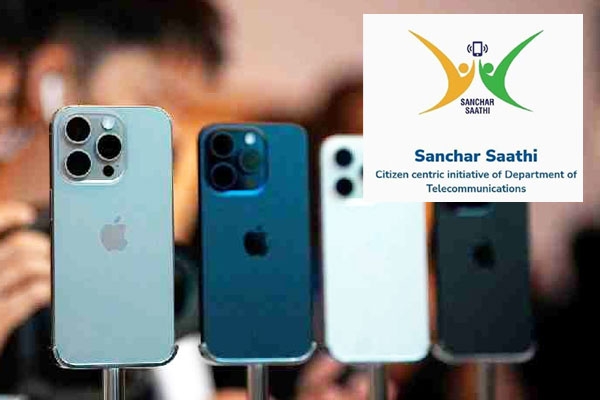
Apple has no intentions of following a requirement to install a government-owned cyber safety application on its phones, and will express its worries to the Indian government, as reported by three sources, after this decision generated fears about surveillance and political backlash. The Indian government has secretly requested that companies like Apple, Samsung, and Xiaomi preload their smartphones with an application named Sanchar Saathi, which translates to Communication Partner, within a timeframe of 90 days. This application is designed to locate stolen devices, block them, and safeguard them from misuse.
The government also demands that phone makers ensure the app cannot be turned off. Additionally, for devices already being distributed, manufacturers are required to deliver the app to phones through software updates, as first reported by Reuters on Monday. Later, India’s telecom ministry verified this action, referring to it as a security measure aimed at addressing the "serious endangerment" of cyber security. However, political opponents of Prime Minister Narendra Modi and advocates for privacy have criticized this action, claiming it allows the government to access the personal information of India's 730 million smartphone users. Following this backlash, India's telecom minister Jyotiraditya M. Scindia stated on Tuesday that the app is a "voluntary and democratic system," emphasizing that users can choose to activate it and can "easily remove it from their phone whenever they wish."
Currently, users have the option to delete the app. Scindia did not provide comments or clarify the directive issued confidentially on November 28, which instructed smartphone manufacturers to begin preloading it and to make sure "its functionalities are not disabled or limited." However, Apple does not intend to comply with this directive and will inform the government that it does not adhere to such mandates globally due to the various privacy and security concerns it raises within the iOS ecosystem, according to two industry sources familiar with Apple's issues. They chose to remain unnamed because the company's strategies are confidential. "This isn't just a simple action; it's more like using a double-barrel gun," said the first source.
Apple and the telecommunications ministry did not reply to requests for comments. To address a recent rise in cybercrime and hacking, India is joining global efforts, most recently alongside Russia, to create regulations that prevent the use of stolen phones for scams or for promoting government-supported apps. This directive sparked a lot of controversy both in and out of Parliament on Tuesday, with many lawmakers accusing the government of launching an app that would serve as a surveillance tool. Rahul Gandhi, a leader from India’s main opposition Congress Party, mentioned that he intends to discuss the app in Parliament.
The Congress Party has asked for the order to be withdrawn. On social media platform X, KC Venugopal, a senior Congress figure, expressed that "The Big Brother cannot keep an eye on us." A statement from the Modi administration indicated that the app could help deal with situations involving duplicated or fake IMEI numbers, which can enable fraud and misuse of networks. "India has a large market for used mobile devices," the telecommunications ministry noted in a statement on Monday evening. "There have also been instances of stolen or banned devices being resold."
While Apple maintains strict control over its App Store and proprietary iOS software, which are essential for its $100 billion annual services revenue, Google's Android is open-source, giving manufacturers like Samsung and Xiaomi more freedom to alter their software. According to another source, Apple does not intend to pursue legal action or publicly oppose the order, but will inform the government that it cannot comply due to security issues. The app directive comes as Apple is involved in a legal dispute with an Indian regulatory body concerning the country’s antitrust enforcement legislation. Apple has mentioned it could face penalties of up to $38 billion in that case.
Other companies, including Samsung, are assessing the order, stated a fourth source familiar with the situation. Samsung did not reply to requests from Reuters for comment. Sources have indicated that the government proceeded with the order without consulting the industry.