(Image source from: PTI)
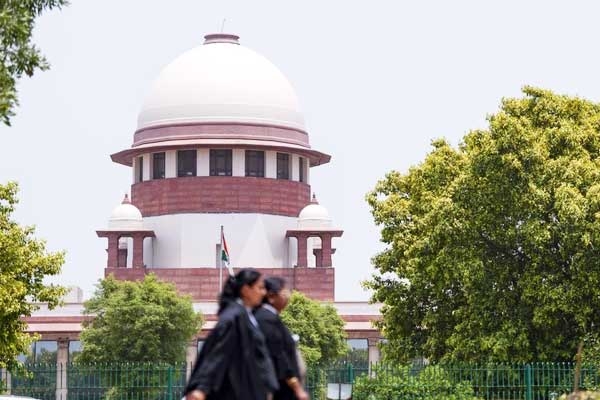
The Supreme Court has raised doubts about the legitimacy of talaq-e-hasan, a version of triple talaq where a Muslim man can divorce his wife by saying 'talaq' once each month for three months. This comes as the highest court reviews the topic of divorce in the Muslim community. Eight years prior, the court banned instant triple talaq, known as talaq-e-biddat, deeming it "unlawful." Talaq-e-hasan differs from talaq-e-biddat because it involves a delay in the divorce process. "How can this be allowed in today's world?" inquired a panel of Justices Surya Kant, Ujjal Bhuyan, and NK Singh while addressing several appeals questioning the legitimacy of talaq-e-hasan in a session this morning. The court also got involved in a situation regarding a Muslim woman facing difficulties enrolling her child in school, as her ex-husband did not sign the necessary documents during their divorce. Her lawyer informed the court that her husband, Ghulam Akhtar, finalized the divorce through his attorney and subsequently remarried.
"The husband will push her into polyandry because of his actions. The talaq notice is 11 pages long and does not contain the husband’s signature. The advocate is the one who communicated the talaq," mentioned her lawyer. The advocate for her husband claimed that this is a usual custom in Islam. To this, Justice Kant inquired, "Is this really an accepted practice? How are such new ideas being created?" "What stops the husband from talking to her directly? He must have such pride that he can’t even talk to her about the divorce. How can this be supported in today’s world? It affects a woman's dignity," the court commented, noting that the lawyer was the one handling the divorce issue instead of the husband. "If a divorce is to happen according to religious rules, then all prescribed steps must be followed," it stated.
The court also asked the woman about the school that denied her child admission and expressed worry over how women are treated in the country, highlighting that even professionals like journalists and doctors encounter similar issues.
It requested details on the different divorce methods available to Muslims and called on the husband to appear for the next session. "Let him come here and provide whatever she needs without conditions," the court insisted. Expressing admiration for the woman’s willingness to pursue her case, it reflected on the plight of those less fortunate. "We commend this woman for standing up for her rights. But what about poorer women who lack support? If she remarries and her ex-husband accuses her of polyandry, should society accept this kind of behavior?” the court remarked.