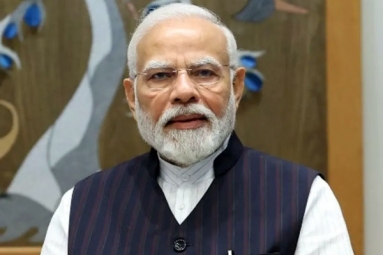
(Image source from: Economic mistakes of Modi government})
Governments have time and again committed the same mistake when it comes to economic policy. In their eagerness to "bite the bullet" they forget that while it's ok to to bite but there should be minimum or "no wound".
Almost two thousand years ago, Kautilya had aptly said in the Arthashastra that the burden of taxation should not be felt. It has to be increased gradually so that people don't feel the pinch.
This has important lesson for present day government. If the ruler needs to collect more money, it should be done in a graduated form, so that people don't realize that hey are paying a little extra. The pain shoult be as little as possible.
Diesel price is the best example of this minimum increase in price rise. It has been increasing monthly by 50 paise. People barely notice that diesel price has increased. Diseal price has been rising for several months now, but you hardly feel the difference as it has been gradual. This has resulted in dramatic reduction in diesel subsidy, and very soon it may disappear.
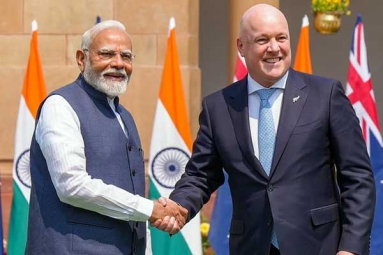
Ignoring this economic wisdom, the Narendra Modi-led NDA government went ahead and announced a sharp hike in rail fares, and suburban fares saw a stiffer hike. Opposing voices were soon heard (some from their own Mps) and there has been the much predictable fare rollback. However, the political damage is done, and the new government is already nervous about hiking prices (much overdue now) of other subsidised goods including cooking gas and fertiliser.
Former PM Rajiv Gandhi, who had a bigger mandate than PM Modi, had committed a similar mistake. Shortly before the 1986 Budget , after completing one year in office, the former PM announced a steep hike in prices of oil products. His popularity was never the same. Manmohan Singh made a similar mistake by announcing a steep hike in fertiliser prices in his very first Budget in 1991. Dr Singh had to rollback the hike following revolt from Congress politicians. Even V P Singh, when he as prime minister, had to roll back his decision to hike oil product prices.
Inspite of these previous examples the NDA government went ahead with its rail fare hike, only to rollback the increase (what if it was only partially).
Prices have to be increased. It's inevitable. In such a scenario, the government adopt a simple rule. Price hike should be so small that it won't provoke people to rise in protest. However, there should be a series of hikes in succession and the cumulative impact will be considerable. iAnd the end result will be the same, reducing the subsidy burden. Only people will not feel the burden, while the government continues to remain popular.
This strategy will work in all the states of India, except West Bengal, where in the 1970s a hike in bus fare by one-paisa led to massive protests and state transport buses were burnt.
People will not complain much and pay without a fuss. The corporate world has been following this for decades. Did you ever realise that the price of toothpaste has been increased.
The policy can be adopted for increasing the price of cooking gas. As Kirit Parikh had rightly suggested that price of cooking gas needs to be hiked by Rs 5 each month. It would be advisable to make it Rs 10, as the subsidy burden at present is so huge that that it would take many years to phase it out.
Similarly, fare hikes in railways can be increased in every travel season, and there is no need to go to the Parliament for that. In fact why do we need a railway Budget? After all the need was not felt for transport budget or postal budget by states. Even fertiliser prices can be increased as often as the procurement prices are hiked. The announcement can be made together.
Soon the people of the country will get used to paying the actual cost of things. This will help to bring down the Centre's fiscal deficit to 2%. Of course, income transfers have to be made to the genuinely poor as compensation.
(Picture Source: economictimes.indiatimes.com)
(AW: Pratima Tigga with inputs from rediffmail.com)