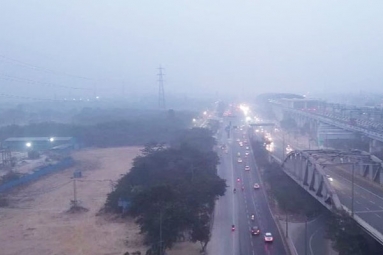
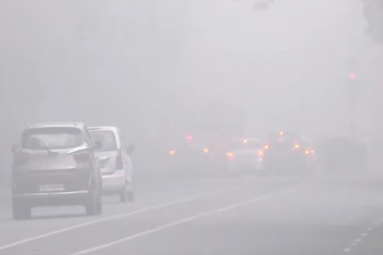
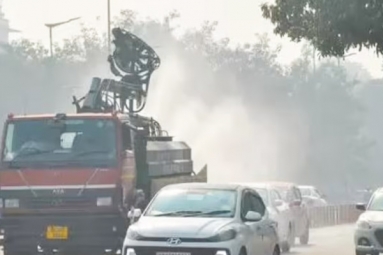
(Image source from: Oneindia.com)
In a shocking report presented in Parliament, the Union Ministry of Health and Family Welfare revealed that six major government hospitals in Delhi recorded an astonishing 2,04,758 cases of acute respiratory illness (ARI) in their emergency rooms from 2022 to 2024. Out of these, 30,420 patients, which is almost 15%, needed to be hospitalized, highlighting the serious health impact of the ongoing air pollution problem in the city. This information was shared by Minister of State for Health and Family Welfare, Prataprao Jadhav, in response to Question No. 274 posed by Rajya Sabha MP Dr Vikramjit Singh Sahney (Nominated).
Dr Sahney inquired specifically:
If the Ministry has researched the link between increasing air pollution and respiratory diseases in cities;
What the rise in outpatient and hospital admissions for asthma, COPD, and lung infections in major cities, especially Delhi, has been from 2022 to 2025; and
If the Ministry intends to implement policies to gain a better understanding of how air pollution affects respiratory diseases.
Year-wise breakdown (6 hospitals: AIIMS, Safdarjung, LHMC group, RML, NITRD, VPCI):
2022: 67,054 emergency cases | 9,874 admissions
2023: 69,293 emergency cases | 9,727 admissions
2024: 68,411 emergency cases | 10,819 admissions.
Even though there was a slight decrease in total emergency visits in 2024, the number of patients who needed to be admitted increased significantly, showing that the cases being brought to hospitals are getting worse. The government acknowledged that "air pollution is one of the factors causing respiratory issues and related illnesses," but emphasized that health effects are affected by many other elements, such as diet, profession, economic status, and existing health conditions. A multi-city study by the Indian Council of Medical Research (ICMR) across five locations found that increases in pollution levels were directly related to a rise in emergency room visits for respiratory problems. Among more than 33,000 patients studied, a clear link was found between worsening air quality and respiratory health issues, although the study could not prove a direct cause-and-effect relationship. In addition, the National Centre for Disease Control (NCDC) has broadened its digital tracking of illnesses connected to air pollution through the Integrated Health Information Platform (IHIP) since August 2023, covering over 230 important locations in 30 States and Union Territories, including six in Delhi.
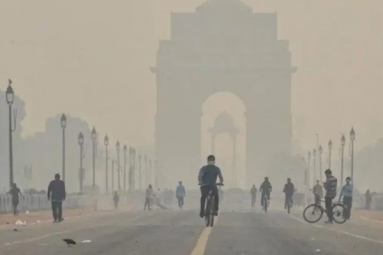
Every year, the Health Ministry releases a thorough health advisory to all states as part of the National Programme on Climate Change and Human Health (NPCCHH). The advisory for 2025, which came out in April, encourages states to improve their health care readiness, train their workforce, stock necessary medications, and spread public awareness when the Air Quality Index (AQI) falls into the "poor" category or worse. However, the people of Delhi still suffer from winter smog, agricultural fires, vehicle emissions, and construction dust, with no noticeable improvement in emergency respiratory cases year after year. As the national capital gets ready for another toxic winter, the latest data from Parliament serves as a grim reminder: Delhi is truly suffocating - and more than two hundred thousand emergency visits in just three years is merely the documented part of the crisis.