(Image source from: AFP)
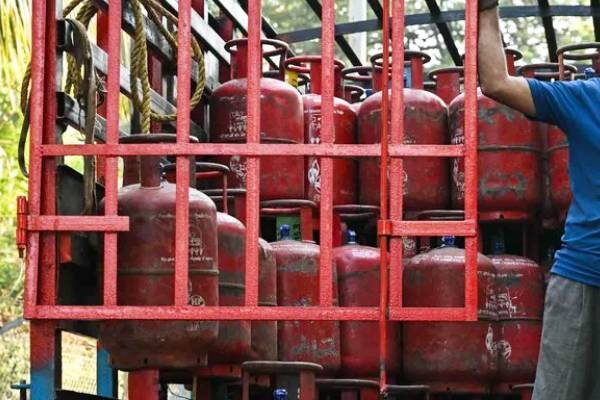
The Indian Government has activated the Essential Commodities Act of 1955 to manage the supply, availability, and fair distribution of oil, oil products, and natural gas. This action allows officials to guarantee constant access to vital fuel resources, stop stockpiling, and maintain distribution during the current conflict in Iran and related supply issues. This choice was made to safeguard consumers from possible shortages due to disruptions affecting important shipping routes like the Strait of Hormuz. The intensifying conflict in West Asia involving Iran, Israel, and the United States is starting to impact areas outside the battle zone, raising worries about how it might affect India’s energy and trade. India significantly depends on imports to fulfill its demand for liquefied petroleum gas (LPG), a large portion of which comes from suppliers in West Asia.
The government has tried to assure the public by saying they are keeping a close eye on the situation and that there is no current shortage. While speaking in Parliament on Monday, External Affairs Minister S Jaishankar referred to the events in West Asia as a serious concern and mentioned that the government is monitoring the possible effects on global supply chains and energy markets. He pointed out that ongoing instability might disturb trade, business operations, and energy supplies essential for India’s economy. The Essential Commodities Act of 1955 was introduced by the Indian Government to guarantee that vital goods are available to the public at reasonable prices while preventing stockpiling, black marketing, and fake shortages. Over the years, this law has been crucial for the government in curbing hoarding, controlling retail inflation, and ensuring national food security.
According to Section 3 of the Act, the Central Government has the authority to oversee the production, supply, and distribution of essential goods. It can set stock limits, regulate trade practices, determine prices, and limit hoarding to keep the market stable. Additionally, Section 5 allows the Centre to pass its powers from Section 3 to state governments or designated officers, which helps in faster and more effective action on the ground. In 2020, Parliament revised the Act to restrict the Centre's power to control certain commodities like cereals, pulses, potatoes, onions, edible oilseeds, and oils only during exceptional situations such as war, famine, severe price increases, or serious natural disasters. Oil products, including LPG, are categorized as "essential commodities" under this Act. The central government has instructed oil refineries to increase LPG production and focus on delivering it to local homes. Refineries have also been prohibited from redirecting propane and butane streams to petrochemical manufacturing to ensure these materials are mostly used for LPG supply.